Ina Old Shoes: Blood Tribe First Female Advanced Care Paramedic
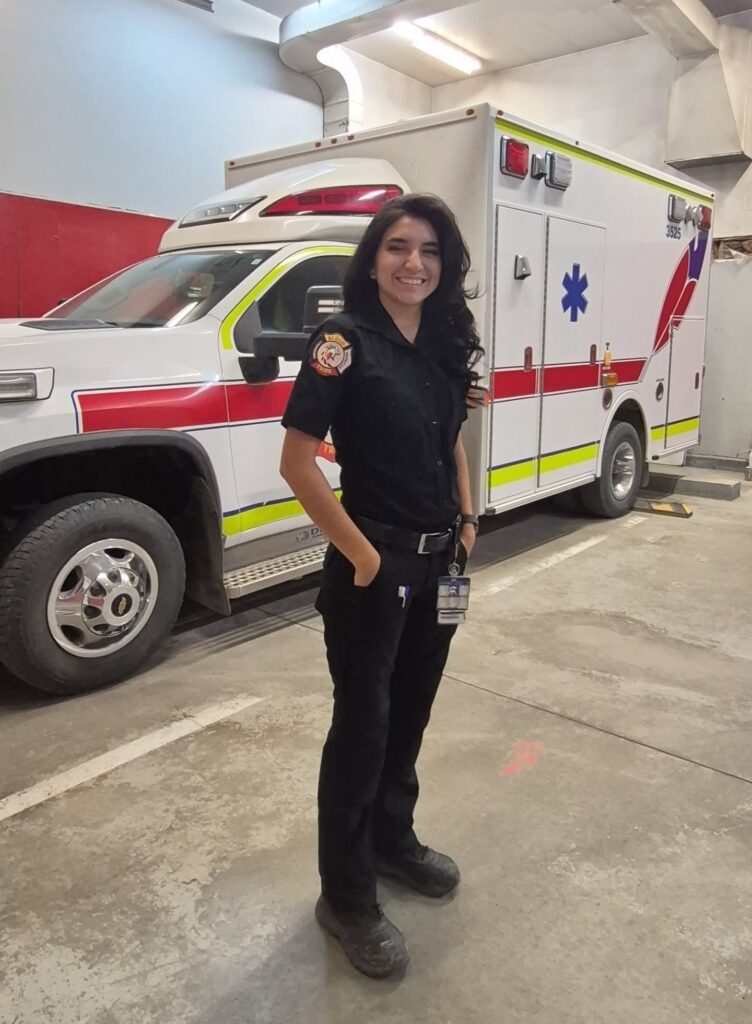
For Ina Old Shoes, the journey to becoming an Advanced Care Paramedic (ACP) has been a ten-year testament to resilience, and a deep commitment to the Blood Tribe.
Old Shoes path began in 2016 and included academic upgrading, firefighting, hands-on field experience, and rigorous post-secondary education. Through perseverance and an unwavering resolve to break generational cycles, she has achieved a historic milestone, becoming the first female community member to earn the ACP designation.
Driven by a determination to combat systemic racism and healthcare biases, Ina pursued her advanced training to ensure her patients are treated with the dignity, equity, and compassionate care they deserve.
Read below to learn more Ina’s story and the people who helped her achieve this milestone
What inspired you to take the next step in your career and advance your clinical training?
I wanted to be in a position where I could confidently advocate for my patients—not only in their care, but in how they were treated. I knew becoming an Advanced Care Paramedic (ACP) would give me the education, authority, and credibility to stand firm when someone questioned what was best for my patients.
I did not pursue this designation for myself alone. I did it for my people, regardless of which Nation or community, who deserve to be treated with dignity, fairness, and compassion. I also believe that the care I provide should reflect those same values for every patient I encounter, regardless of their background.
You are the first female community member to achieve the ACP designation—a huge milestone for our team and community. What does this achievement mean to you personally?
Although I am the first, I will not be the last. From the moment I dreamed of becoming a paramedic in 2016 to graduating in 2026, my journey took approximately ten years. It included upgrading, firefighting, work experience, and five years of post-secondary education. As a little girl growing up on the Blood Reserve, I dreamed of helping people and building a better future for myself. I can finally say I finished what I started, despite the many times I wanted to quit.
What kept me accountable was the community I wanted to serve. If this had been about my own ambition alone, I would have chosen an easier path. Knowing that my people needed someone who understood their experiences kept me going.
This achievement means more than earning a designation or working on an ambulance. It means showing the next generation that we are capable, determined, and resilient. I hope other members of our community see my journey and recognize that if someone from the rez can do it, they can too. I want this milestone to open doors for others, not stand alone as a first.
What would you say to other women or aspiring paramedics in our community who hope to follow in your moccasins?
Don’t quit. The only thing that could have stopped me from achieving this was giving up. I failed, cried, and questioned my worth many times, but I never stopped moving forward.
It is not easy pursuing a higher education when you come from a home without a strong educational foundation or the guidance to navigate college. The educational systems we navigate were not built with the success of First Nations people in mind. Breaking generational cycles takes sacrifice, courage, and the persistence to keep going, even when the path was never designed for us.
During the hardest moments, I reminded myself that the pain I felt in school was better than returning to the circumstances I was trying to leave behind. Even when I could not see the progress, I trusted that every step was moving me forward.
Education gives us opportunities, strengthens our voices, and helps us challenge the barriers our people continue to face. We may have to work harder to reach the same opportunities, but we need to fill those spaces.
Keep going, even when you doubt yourself. You do not have to see the entire path to take the next step.
How will this expanded role and training change the way you care for patients on shift day-to-day?
As an ACP, I have a broader scope of practice, greater responsibility, and access to advanced medications and equipment. More importantly, my education allows me to recognize a wider range of conditions, consider different diagnoses, and help patients make informed decisions about their care.
I am particularly aware of the biases that can affect patient treatment. Women are often undertreated for pain because of assumptions about their pain tolerance. First Nations patients, particularly those with current or previous substance use, may also face stigma and have their pain management questioned because of concerns about relapse.
As a Blackfoot woman, I feel a responsibility to help address these systemic issues. Indigenous patients can face racial bias in healthcare, and I want to use my education, experience, and clinical judgment to advocate for appropriate treatment.
My goal is to ensure that patients are heard, taken seriously, and treated as individuals—not through the lens of stereotypes. Every patient deserves compassionate, evidence-informed care, and I want to be part of making that a reality.
The People Behind the Journey
No one reaches a milestone like this alone. My journey was shaped by the sacrifices, encouragement, prayers, and love of people who helped me keep going when I struggled to believe in myself.
My mother, Gretta Old Shoes: My mom sacrificed her own time, energy, and personal goals to give my brother and I a better future. She even arranged for us to live with a non-Indigenous family so we could graduate from high school. Thank you, Mom, for teaching me that meaningful achievements often come with sacrifice and what I needed to do to go further in life.
My late grandmother, Joyce Old Shoes: My grandmother was a pillar of strength during some of the hardest years of my life. She encouraged education like no other and spoke at my 2016 graduation. She grounded me whenever I felt lost, she had so much knowledge, wisdom and always knew just what to say. She did not live to see me graduate from Medicine Hat College in 2026, but throughout my five years there, I often felt her presence. I wish she could have seen this moment, but I carry her love and teachings with me every day.
My aunt, Philistine Old Shoes: My aunt Phil always encouraged me to choose a career I could build a future on. Her advice to find a career that was realistic is what helped me choose paramedicine, and I am grateful she pushed me toward something that would give me stability and purpose for the rest of my life. She set me up for success and I’m grateful to have had her hand guide me through life.
Assistant Fire Chief Leonard Chief Moon: Thank you for opening the door for me when I was 18 and fresh out of high school. Through firefighting, I gained valuable experience responding to calls, working with teams, and finding my place in emergency services. You continued to check in on me, show up for me, and advocate for me throughout the years. Your support has helped many community members find their way into EMS, and I am grateful to be one of them.
My late friend, Cody Wells: I would like to dedicate my diploma to Cody. Before entering EMS, I watched him experience stereotyping that changed how I understood the treatment of our people in EMS off the reservation. That moment strengthened my determination to become a paramedic. Whenever I wanted to quit, I remembered him and the many others who deserved better. I knew I was pursuing this career for more than myself.
My dear cousin, the late Ginger Old Shoes: Ginger supported me throughout school and was always there to talk. She invested so much love into my journey, including helping with my going-away bbq, and I had looked forward to celebrating my graduation with her. I wish she could have been there for that final celebration. Thank you for always showing up for me. I miss you, and I wish you could have seen me cross that finish line.
My husband, Mekethia Fairbanks: My husband has been my greatest source of support throughout this journey. During my first year, he helped me find a place to live in Medicine Hat while he continued working in Lethbridge, commuting back and forth and even sleeping in my cousins closet when he stayed in Lethbridge. Eventually, he moved to Medicine Hat and changed jobs so he could be there for me emotionally as I became lonely.
He supported me in every way he could. He helped financially, brought me dinner, made trips when I forgot things at home, studied with me, explained what I struggled to understand, and quizzed me before exams. Through the difficult days and the good ones, he stood beside me with patience, understanding, and love.
I know without a doubt that I would not have accomplished what I have without him. This was never just my accomplishment; it has always been ours. Thank you, my love, for every sacrifice you made, every way you showed up for me, and for believing in me through it all. I could not have done this without you.
Our Sundance community
Thank you to everyone who prayed for me, listened to my requests, and helped me find the strength to continue. Having my face painted and making vows to give back reminded me that this journey was never just about me. I made a commitment to use what I achieved to serve my community. Your prayers and support helped me reach this milestone, and I hope to honour them through the care I provide to our people.
To everyone who believed in me, encouraged me, and helped me along the way: thank you. I carry a piece of each of you into this next chapter, and I will do my best to give back through the work I do.
If anyone has any interest or questions regarding how to become an Advanced Care Paramedic, please dont hesitate to reach out; ina.os@btdh.ca