Kainai Powwow & Celebration
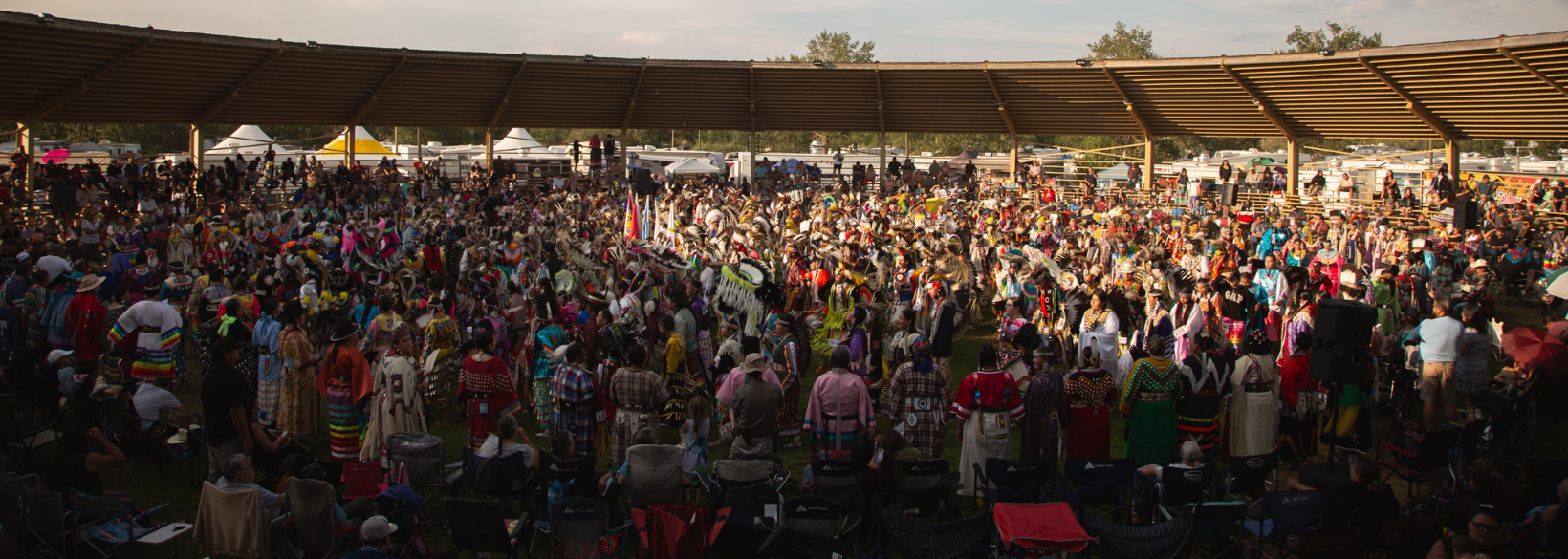
The Annual Kainai Powwow & Celebration is our premier social gathering as a Nation. This weekend will be filled with connection through dance, singing, sporting events and community gatherings. We gathered important information for Blood Tribe Members to stay safe and healthy during the festivities.
Zone Mapping
Blood Tribe Emergency Services has implemented a zone mapping system for this year’s event. This system will make it easier for participants, vendors, and emergency personnel to pinpoint exact locations, enhancing safety, efficiency, and overall experience of the celebration.
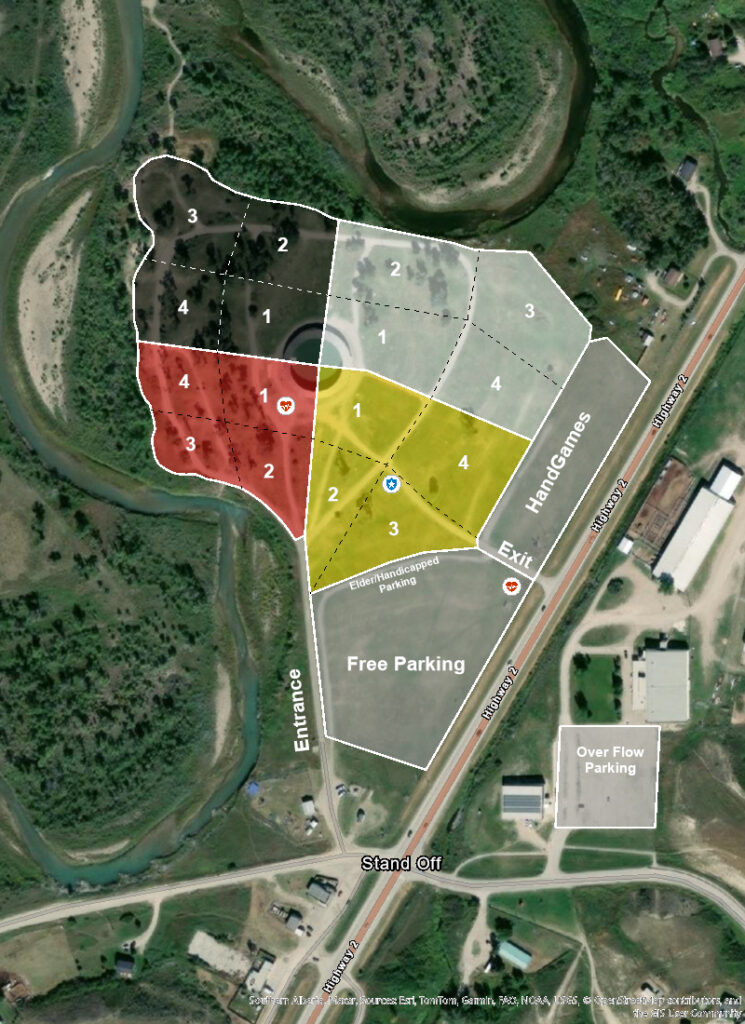
The zone-based map system will help reduce delays and confusion for our first responders and security. The powwow grounds are divided into four main zones, each marked with a different colour. Each zone is also split into smaller numbered sections called quadrants. Colour-coded flags will be placed on the arbour and light poles, and laminated signs showing the zone and quadrant will be posted throughout the grounds and along access routes.
Blood Tribe Emergency Services Location
Blood Tribe Emergency Services and Security can be found at the First Aid Trailer located around the arbor in ZONE: RED 1. EMS & Fire Apparatus will be parked in the public parking at the exit.
For the duration of Kainai Powwow & Celebration the Firehall will be periodically unstaffed. All inquiries and non-emergency assistance can be directed to Fire and EMS staff at the Powwow grounds.
Additional Support Locations:
- Blood Tribe Police General Inquiry will be located in ZONE: YELLOW 3
- Misting Tents: ZONE: YELLOW 1 and RED 1
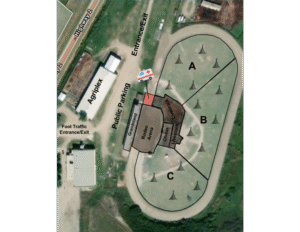
The rodeo grounds will be divided into clearly marked zones that cover the entire camping and livestock areas. Key spots like the grandstands, rodeo arena, chutes, and livestock pens will also be clearly labeled to make it easier to find your way around and improve coordination. Laminated signs showing each zone will be posted throughout the grounds so everyone can quickly identify locations and communicate more easily.
EMS will be located outside the rodeo arena, adjacent to the grandstands during all rodeo events.
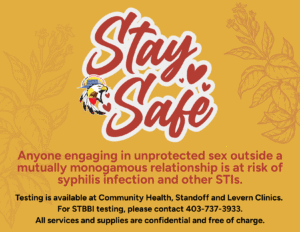
Anyone engaging in unprotected sex outside a mutually monogamous relationship is at risk of syphilis infection and other STIs.
Testing is available at Community Health, Standoff and Lavern Clinics. For STBBI testing, please contact 403-737-3933. All services and supplies are confidential and free of charge.
Sexually Transmitted and Blood-Borne Infections (STBBI)
The Blood Tribe Department of Health is here to support you. STBBIs like HIV, Hepatitis C, chlamydia, and gonorrhea can affect anyone—regardless of age or lifestyle. We’re offering free, judgment-free information and supplies to help keep our community safe and informed.
Available at the Powwow and BTDH Locations:
-
Free safe sex supplies and harm reduction kits
-
Information on STBBI testing, treatment, and prevention
-
Safe sex and safer use resources
-
Friendly staff available to answer questions
You can prevent getting an STI by:
-
Talking with your partner about using protection and about each other’s history of STIs, before sexual activity.
-
Learning how to use protection correctly. Getting tested regularly for STIs, even if you don’t have any symptoms.
-
Getting immunized against hepatitis B and human papillomavirus (HPV).
Bringing the Spirit Home Outreach team provides supplies in the community. If you require any supplies, please contact 403-737-8600.
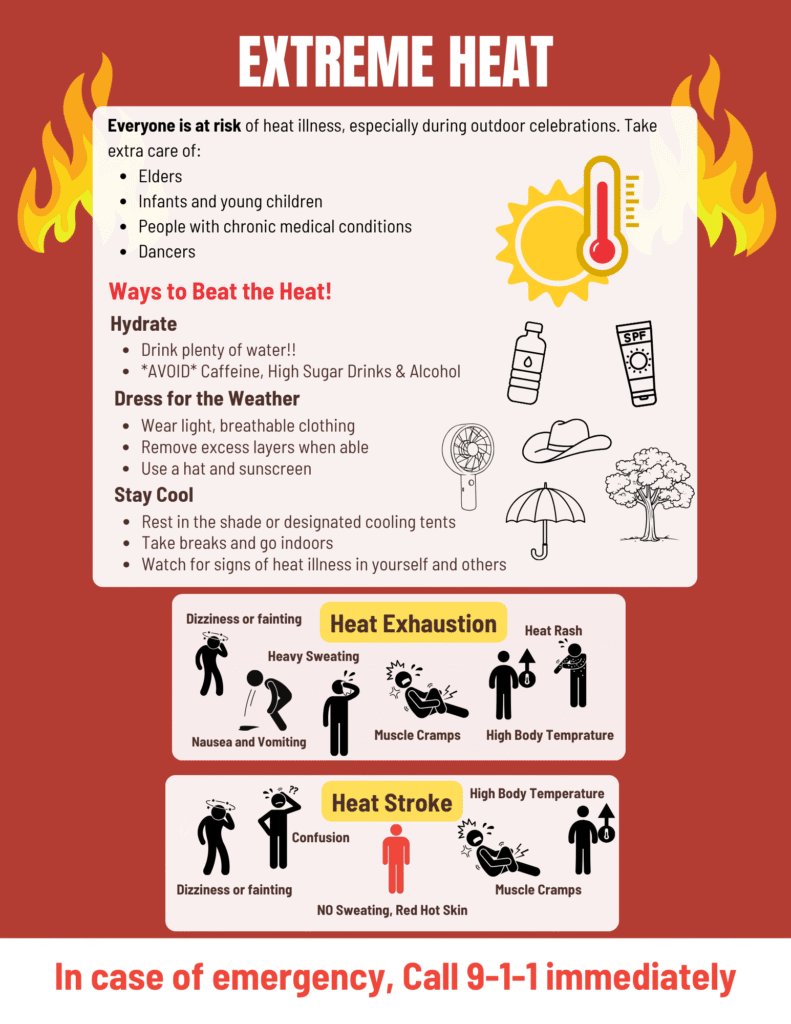
Important reminders
Check on others: Ensure family members, neighbours, and Elders are coping well during extreme heat conditions.
Never leave children or pets in vehicles: Temperatures inside a car can rise quickly and become life-threatening within minutes.
It is important to take extreme heat seriously and take steps to protect yourself and those around you. Stay informed by checking local weather alerts and follow any guidance from public health or emergency management services.
Severe Weather
The Summer weather forecast can be unpredictable, so it is important to be prepared for a severe weather event this weekend.
Thunderstorms have the potential to become severe bringing large hail, strong winds and heavy rain. Remember some severe thunderstorms can produce tornadoes. Be prepared for severe weather.
If threatening weather approaches, take cover in a basement or interior room. If outside, protect yourself from flying debris and hail.
When thunder roars, go indoors!
Lightning kills and injures Canadians every year. Large hail can cause significant damage and injury.
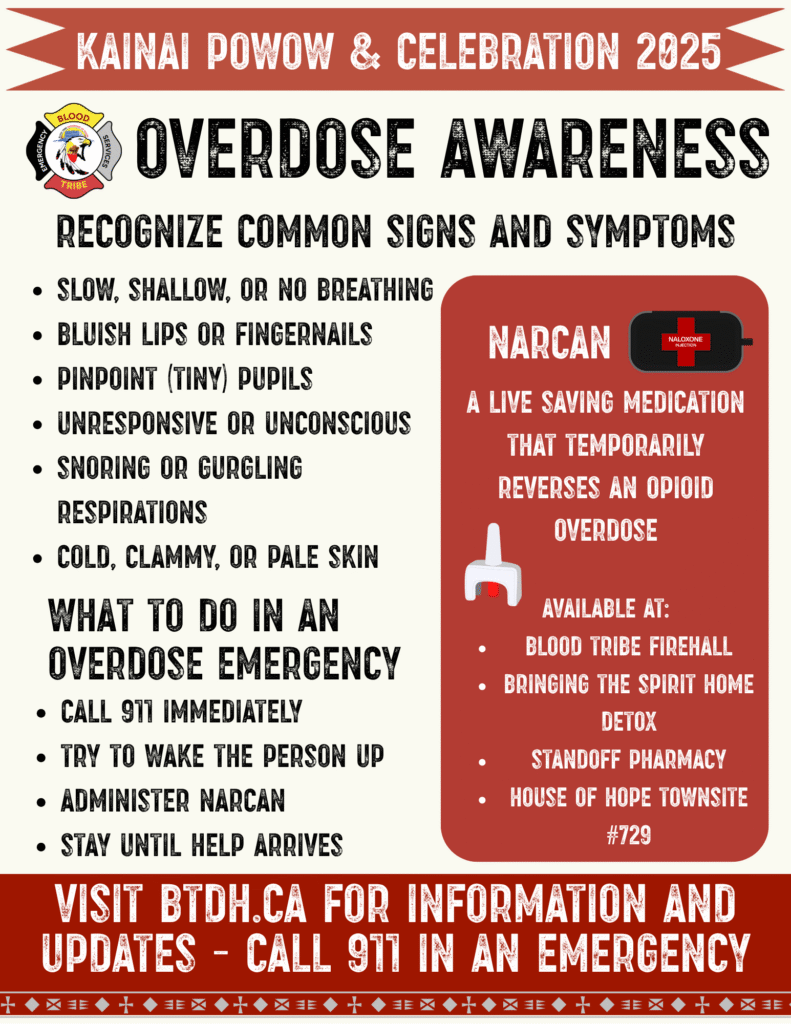
Opioids include both prescription medications (such as oxycodone, hydrocodone, and morphine) and illegal drugs (like heroin and illicitly manufactured fentanyl). They can be highly addictive and have a high risk of overdose.
What to do in an overdose emergency
-
- Call 911.
-
- Roll them into the recovery position if they are passed out. This prevents more problems like choking on vomit or their tongue.
-
- If the person is not breathing, perform mouth-to-mouth (rescue breathing). Make sure there is nothing in their mouth. Tilt their head back and give them a breath every five seconds.
-
- Use the naloxone kit if you have one. For directions on how to administer naloxone, download the PDF.
-
- Stay with them until help comes. If you can’t stay, write down on a piece of paper what drugs the person took, and leave it with them so they can get the right help.
Prevent an Opioid Poisoning
Don’t use alone: You can’t save yourself during an overdose, but we can save each other. Please don’t use drugs while alone, and don’t let those around you use while alone either.
Start low and go slow: Do a small test dose to see if you can handle the drug. Infrequent use can lower your tolerance and make you more sensitive to drugs
Don’t mix drugs: Mixing prescription or other street drugs, alcohol, cannabis can compound overdose symptoms
Carry a naloxone kit: Keep naloxone on hand if you or someone you know is at risk of an opioid overdose.
What you can do:
-
Avoid swimming or wading in the affected area
-
Report any sightings of discarded needles or concerning conditions
-
For needle-stick injuries, contact the 24-hour response line immediately at 780-218-9929
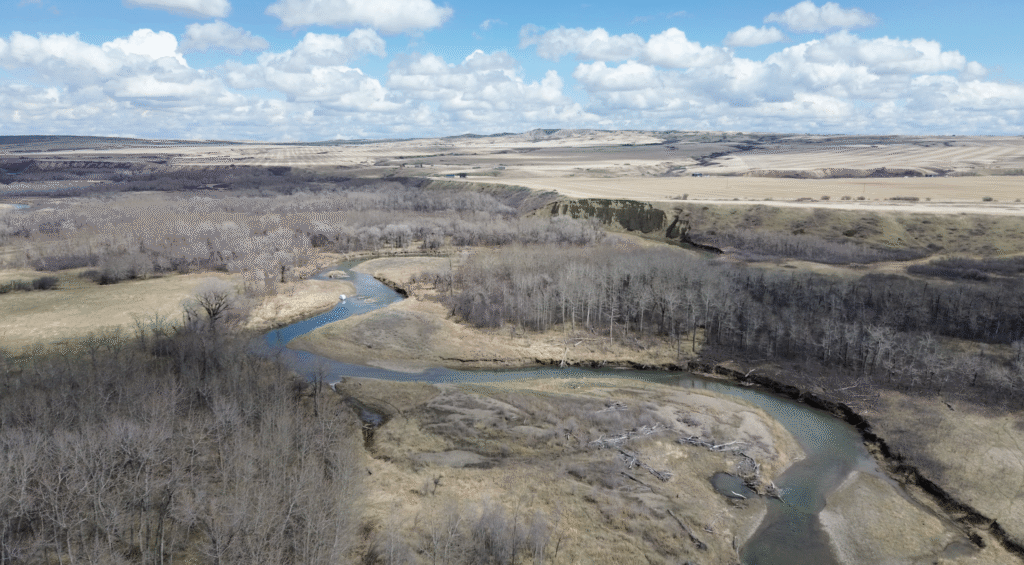
The Blood Tribe Department of Health (BTDH) is urging all community members and visitors to exercise extreme caution when using the Belly River in the lower Standoff area due to ongoing public health and safety concerns.
With warm weather and the upcoming Kainai Powwow & Celebration, more people may be using the Belly River for recreation. However, current conditions pose a direct threat to both public health and environmental safety.
BTDH teams and outreach partners have identified the following serious risks:
-
- An encampment located near the riverbank with insufficient sanitation, resulting in human waste near the water
-
- The potential presence of discarded needles (sharps) in the surrounding area and water
Public health and outreach teams are working to:
-
- Assess and address immediate public health hazards
-
- Increase sharps collection and safe disposal efforts
-
- Explore temporary sanitation solutions
-
- Coordinate a long-term, community-led response to ensure safety